Showing posts with label Theodicy. Show all posts

Wednesday, December 19, 2012

Where Was God? (By Mike Huckabee)

Former U.S. presidential candidate Mike Huckabee shares his insights on the recent Connecticut school shooting tragedy.


Transcript:

Maybe it's simply the attempt to express our collective shock when we say we're trying to make sense of the horrific shooting at Sandy Hook Elementary School. But we're not gonna make sense; not from that which is totally disconnected from the cognitive capacity of any rational human being. The Governor of Connecticut, Dan Malloy, got it right when he said, "evil has visited this community". President Obama, in an emotional statement from the White House, spoke more as a parent than a politician and he quoted the Bible to bring comfort to the nation. Churches were filled in Newtown, Connecticut last night as candlelight vigils were held to grieve for the 27 innocent people killed and the countless lives of those shattered by a few seconds of crazed carnage.

On Friday, Neil Cavuto asked me,

"Where was God?"

I said,

"For 50 years we've systematically attempted to have God removed from our schools (and) our public activities but then at the moment we have a calamity we wonder where He was."

The predictable "left" lit up the airwaves and blogosphere with a violent, vicious reaction and jumped to the conclusion that I said that if we had prayer in school the shooting wouldn’t have happened. I said nothing of the sort.

It's far more than just taking prayer or Bible reading out of the schools.
It's the fact that people sue a city so we aren’t confronted with a manger scene or a Christmas carol; that lawsuits are filed to remove a cross that's a memorial to fallen soldiers.
Churches and Christian owned businesses are told to surrender their values under the edict of government orders to provide tax-funded abortion pills.
We carefully and intentionally stop saying things are sinful and we call them disorders; sometimes, we even say they're normal.
And to get to where that we have to abandon bedrock moral truths…

Then we're asked,

"Where was God?"

I responded as I see it,

"We escorted Him right out of our culture and we've marched Him off the public square, then we express our surprise that a culture without Him actually reflects what it's become."

As soon as the tragedy unfolded, I think God did show up.
He showed up in the lives of teachers, who put their lives between a gunman and their students.
He showed up in policemen, who rushed into the school not knowing if they would be met with a barrage of bullets.
He showed up in the form of hugs and tears for children, parents and teachers, who had lived through the slaughter.
He showed up at the overflowed church services, where people lit candles and prayed. 
He showed up at the White House, where the president invoked His Name and quoted from His Book.
 
In a few days or weeks we'll probably ask God to excuse Himself from view. And we will announce in our arrogant pride that we are now enlightened and educated and we've evolved beyond needing Him. And somebody's gonna suggest that we pass a law to stop all this kind of thing. I might want to point out that we don't have to pass a new law; there's one that's been around a while that works if we teach it and observe it:

"Thou shalt not kill."

Oh, there are about 9 others; but to tell you about them would require bringing God back and we know how unacceptable that might be.

* Video courtesy of: http://www.foxnews.com/

Tuesday, August 30, 2011

The Problem of Problems: Non Serviam

photo courtesy of Thermos


“Indeed God has created man to be immortal in the likeness of his own nature, but the envy of the devil has brought death to the world, and those who stand with him shall experience death”
(Wisdom 2:23-24)

Who was the serpent, the tempter who led Adam and Eve to sin?

Revelation, the last book in the Bible, identifies the serpent as none other than Satan, the first of the fallen angels (Revelation 12:9).

Who are the fallen angels or devils and how did they become evil?
  • Like man, angels are endowed with intellect and free will.
  • Like man (and all of God’s creations), angels were created good. Scripture tell us that angels are pure spiritual beings who are superior to man in many ways.
  • Like man, angels were put to the test and asked to prove their love for God. As to the nature of the test given them, theologians could only speculate. Many of them think that angels were shown a vision of the Incarnation, of Jesus Christ’s suffering and crucifixion, and were commanded to adore the Word became flesh. Aware of their superiority to man, some of the angels refused to obey (“I will not serve!”), and by thus marking the birth of hell.
  • Unlike man, the fallen angels were not tempted to sin.
  • Unlike man, there is no redemption for fallen angels. It’s ironic that this is due to their superior nature.
  • Unlike man, who was ignorant to a degree, fallen angels had “angelic intellects” (superior to that of man), making their choice to sin final and repentance impossible. Our (man’s) weakness, so to speak, was our excuse.
Some theologians also believe that men were created to fill out the void left by fallen angels. Though this is mere speculation, it does make sense of the devil’s envy and hatred for mankind.

What is clear is the fact that the fall of both angels and man was brought about by the sin of pride. Therefore, it’s essential for man to practice its opposite, the virtue of humility, in order to rise over evil and all its atrocity.

To Be Continued...

1. Introduction
2. Mystery of Misery
3. Good Job
4. Of Evil and "Non-things"
5. Free Fallen

Tuesday, July 5, 2011

The Problem of Problems: Free Fallen

photo courtesy of velton

How did evil enter the world?

The answer is in the Book of Genesis, where we find the story of our first parents, Adam and Eve. God originally bestowed upon them sanctifying grace and other special gifts, such as constant state of happiness and freedom from pain and suffering. These gifts were theirs to keep (and pass on to us, their descendants) on one condition: they must prove their love for God by not eating the fruit of the tree of knowledge. But alas, tempted and seduced by the serpent’s lies (“you will become like gods”Genesis 3:5), they disobeyed God’s commandment. Adam, the appointed ambassador of the entire human race, committed this grave act we now call “Original Sin” and by thus, death came into the world.

In the novel Don Quixote, we read that: "true love…must be voluntary and not compelled”. Indeed, love must be a deliberate act; it cannot be forced. For this reason, God gave man free will. We can freely decide to love God, believe in Him and submit to His will; or we can freely elect to hate, doubt and rebel against our Creator. Adam and Eve chose to do the latter. And so, it can be said that pain and suffering in this life is due to man’s misuse of free will.


Free will is the basis for justice, for no one can be justly held accountable for their actions unless they are truly free. It gives man the freedom to become saints or sinners; to do what is right or wrong. While a world sans free will is one without evil, sadness or tears, neither can it have goodness, joy, nor laughter. Therefore, a world without free will would be of humans devoid of humanity; a benevolent God would never create one as such. Free will is a gift; we just often choose to make it a curse.

The special gifts God gave Adam and Eve, like freedom from pain and suffering, were privileges; it was not theirs by right. These were gifts from a loving Father who wants to give what is best for His children. These were gifts we would have inherited from our first parents. But unfortunately, these were gifts they freely chose to reject through their sin. To make matters worse, instead of admitting guilt and asking for forgiveness, Adam put the blame on God (Genesis 3:11-12)! But do we, Adam’s descendants, know any better? Don’t we also often fault God for miseries of our own doing?

Free will is not just a fancy term. We are free to choose our own destiny. God loves us so much that He even allows us to choose over Him! However, we must always keep in mind that we are accountable for our actions and that our choices do have consequences. After all, justice is not just a fancy term either.

1. Introduction
2. Mystery of Misery
3. Good Job
4. Of Evil and "Non-things"
5. Free Fallen
6. Non Serviam

Friday, July 1, 2011

The Problem of Problems: Of Evil and "Non-things"

dmBPPhoto

“God saw all that he made, and it was very good.” (Genesis 1:31)

As Christians, we believe that God is the creator of all things. Does this mean God created evil? 

To answer this question, we turn to St. Augustine of Hippo who tells us that evil is not a thing, but is rather a privation or loss of good. Make no mistake - evil is real, but it cannot exist by itself apart from good. Take, for instance, light and darkness. We can measure the properties of light (e.g., intensity, speed, etc.), but we cannot quantify darkness. The reason for this is that darkness has no existence of its own; it is merely the absence of light. In the same vein, we can say that sin is the privation of God’s will; blindness is the loss of sight; death is the absence of life; and so on. Therefore, God created all things, but not “non-things”, such as evil. 

1. Introduction

Sunday, May 15, 2011

The Problem of Problems: Good Job

photo courtesy of Jeff Hathaway


The Book of Job, possibly the oldest in the Bible, not surprisingly deals with the problem of evil - surely the oldest in history. It tells the story of Job, a holy man who, with God's permission, underwent severe tribulations and lost everything he treasured – his children, wealth and health. Job endured and remained devoted, but eventually became angry and challenged God to account for his pain and sufferings. God provided neither an explanation nor justification, rather, in essence asked Job: “who are you to call Me into account?” In the end, Job was humbled and assented to God's will. God then restored Job's health, blessed him with new offspring, doubled the riches he had before the ordeal, and lived for another 140 years before dying a peaceful death.

The Book of Job is an invitation to contemplation. Though it does not directly offer a solution to the "mystery of iniquity" (2 Thessalonians 2:7), it offers profound insights into the problems of life. With eyes of humility, let us look at some of its lessons which are as relevant today as when it was written thousands of years ago:
  • "Then Yahweh answered Job out of the storm: Who is this that obscures divine plans with words of ignorance?" (Job 38:1-2) God's rebuke put Job in his place - and we are reminded that God should be doing the questioning, not Job; that the Creator holds the creature answerable, not the other way around. As diocesan priest Fr. Leo Trese states: "an ant has more right to criticize an Einstein than has man with his limited intelligence to question the infinite wisdom of God".
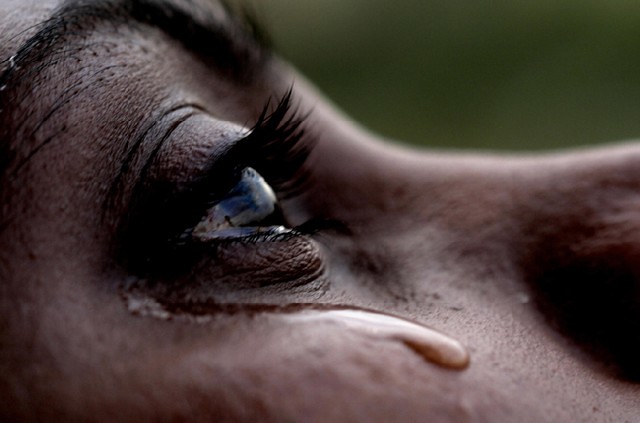
  • “I spoke of things I did not understand, too wonderful for me to know” (Job 42:3) God's wisdom forced Job to realize his ignorance - and we are reminded that on our own, we cannot have all the answers for life's problems; that only through God's grace can we understand life's deepest mysteries. As the Socratic maxim goes – "wisdom is the awareness of ignorance".
  • "If only there was an arbiter between us, who could lay his hand upon both of us…" (Job 9:32) Job humbly acknowledged the infinite gap between God and man - and we are reminded of how that gap has been bridged by the God-man, Jesus Christ; that God shared in our pain and sufferings by becoming man and conquered evil by His death and resurrection. As St. Paul wrote: "As there is one God, there is one mediator between God and men, Christ Jesus, true man, who gave his life for the redemption of all..." (1 Timothy 2:5-6).

The story of Job is one of patience, humility and faith – virtues essential in dealing with pain and suffering. If we follow Job's example and put these virtues into practice, like him, we too shall be rewarded in the end. 

1. Introduction
2. Mystery of Misery
3. Good Job
4. Of Evil and "Non-things"
5. Free Fallen
6. Non Serviam

Wednesday, May 4, 2011

The Problem of Problems: Mystery of Misery

photo courtesy of David Bitters
Evil is indeed, a most profound problem; a mystery, the meaning of which we cannot fully understand in this lifetime. To cast some light on the problem of evil, we must consider the following Divine attributes: 
  1. God transcends space and time. He sees from an eternal point of view. He knows and wants what is best, not just for one, but for everyone; not only for this life, but also for the afterlife.
  2. God is omniscient. To ask “Why does God do this?” or “Why doesn’t God do that?” is tantamount to questioning the judgment of an all-knowing Being.
As finite creatures, there is a limit to our human intellect. Thus, to discern more the nature of evil, we must turn to Divine revelation. Humility brings us to faith and to embrace these beliefs; these beliefs in turn, give us further understanding of this mystery. 

1. Introduction
2. Mystery of Misery
3. Good Job
4. Of Evil and "Non-things"
5. Free Fallen
6. Non Serviam

Monday, May 2, 2011

The Problem of Problems: Introduction

photo courtesy of honikum
Many lives are lost and affected daily due to natural and man-made disasters. Countless hearts are broken and bucket of tears are shed everyday. Where is God amidst all the pain and suffering? The problem of evil, possibly the most serious argument against the existence of God, can be stated simply as follows:
  1. An omnibenevolent (all-good) God would not want evil to exist.
  2. An omnipotent (all-powerful) God could prevent evil from existing.
  3. Evil exist; therefore, an omnibenevolent or omnipotent God does not.
“Everybody Hurts” 
R.E.M.

Pain and suffering is experienced by everybody, both believers and non-believers alike. The difference is, for atheists, life is just is – pain and suffering is what one should expect in a world without God. On the other hand, the theist, Christians in particular, must reconcile the problem of evil with their belief in a God who is omnibenevolent and omnipotent. In other words, Christians look for meaning and purpose of pain and suffering, while atheists seek neither.

“I maintained that God did not exist. I was also very angry with God for not existing.” 
C. S. Lewis

Of all the objections against the existence of God, the problem of evil is perhaps the one most rooted in emotion rather than intellect. Pain and suffering are not just theories, but are daily realities. We want to heal our hurts; not dwell on our distresses. 

Peter Kreeft wrote that to ask “if there is a God, then why does evil exist?" is not the same as when philosophers asks “Why?”, but is rather like that of a "little child with tears in its eyes looking up at Daddy and weeping, "Why?"". In other words, the problem of evil, at its core, is not so much a matter of reason as it is of rebellion. 

1. Introduction
2. Mystery of Misery
3. Good Job
4. Of Evil and "Non-things"
5. Free Fallen
6. Non Serviam