Showing posts with label morality. Show all posts

Sunday, July 1, 2012

An Essay on Morality: The Natural Law (Part 4)

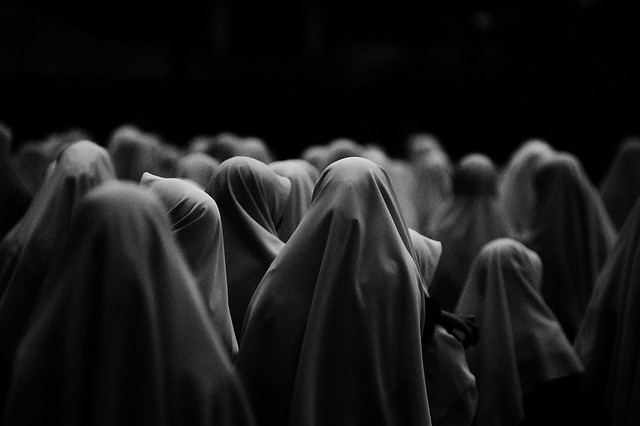
photo courtesy of Chot Touch
Of the natural or moral law, St. Paul wrote: “the demands of the law are written in their hearts” (Romans 2:15). Indeed, that man should “do good and avoid evil” is self-evident to anyone endowed with reason. Natural law gave birth to what is known as natural or human rights. It’s a key element in the creation of the United Nations; its truth makes possible for people from different countries, cultures, ideologies, and religions to come together for a common good.

Man-made laws are valid only if they conform, and not conflict, with the natural law.
And, as with man-made laws, we can also choose not to obey the natural law – to our own detriment. To illustrate, consider the following example:
Alcohol consumption in moderation is acceptable and may even be beneficial health-wise; that being said, drunkenness is wrong and against the natural law, since, besides being harmful to one’s health, it also impairs one’s reasoning which is required for moral discernment. Initially, the penalty for the night’s intoxication is “only” the next day’s hangover. However, the penalties only get worse should one continue a lifestyle of alcohol abuse; it is common knowledge that alcoholics sooner or later suffer serious health problems and personal/social relationships issues.

Once again, this illustration makes perfect sense within the Christian religious framework, for to disobey the natural law is to sin and “the wages of sin is death” (Romans 6:23). In light of this, we can conclude that the natural law is “written in our hearts” for our own good. As C.S. Lewis wrote:
“In reality, moral rules are directions for running the human machine. Every moral rule is there to prevent a breakdown, or a strain, or a friction, in the running of that machine.”
Therefore, when we’re in disharmony with the natural law, we’re harming ourselves; and when we choose sin, we choose death.

  1. Introduction
  2. Christian Morality
  3. The Conscience 
  4. The Natural Law

Friday, June 29, 2012

An Essay on Morality: The Conscience (Part 3)

photo courtesy of JaveFoto
What is conscience?

Conscience is the tool which enables man to discern morality – the distinction between what is good/right from what is evil/wrong.

C.S. Lewis illustrates the meaning of conscience with the following example:
Imagine you suddenly hear a stranger’s voice crying for help.
At that moment, you will probably feel two opposing impulses:
  • First impulse is to run towards the stranger and help (herd instinct).
  • Second impulse is to run away from the stranger for your own safety (survival instinct).
But then a third voice comes into play, urging you to follow your first impulse and ignore the second; this third voice is what we call the conscience.

Conscience can then be defined as the calling within, to always do what is good/right despite personal inclinations or feelings.

What are the properties of conscience?

The conscience is fallible

Earlier, we defined conscience as a “tool which enables man to discern morality”; and, like any other tool, improper use can lead to serious damage. Indeed, the conscience is not always right and can be mistaken. The conscience, man’s internal moral compass, is said to be broken when it does not point to the “true north” – that which is true and good. This can result from the deliberate and habitual breaking of the moral laws. Within the Christian religious framework, our conscience can be in a state of blindness by constant living in sin.

It is one’s responsibility to ensure the development of a well-formed conscience. For this reason, Christians are called to practice daily self-reflection and examination of conscience; this is necessary as we are often distracted by life’s trivialities. Christians use the Word of God as a guide to determining whether a conscience is well-formed: if in conformity then it is; if in conflict then it is not.

The conscience is authoritative

Peter Kreeft observed that granting consciences may differ, there remains an undeniable moral absolute: “never disobey your own conscience”. Of course one can deliberately choose to disobey one’s own conscience. But to do so is not without consequence. Indeed for some, one time disobedience can lead to a lifetime of guilt. The reason for this is, while the conscience is fallible, it is authoritative. Where does its authority come from? For the same reasons as with morality, the conscience’s authority cannot come from evolution, nature, or culture (man); its only plausible source is God.

  1. Introduction
  2. Christian Morality
  3. The Conscience  
  4. The Natural Law

Wednesday, June 27, 2012

An Essay on Morality: Christian Morality (Part 2)

photo courtesy of mick y
Is morality only for Christians?

No. It is possible for an atheist to live a moral life, as it is for a Christian (or other theists) to live an immoral one. After all, everyone inherently share the desire for goodness and truth and the disdain for evil and lies. There are however, by default, differences in how morality is viewed by Christian believers and non-believers:

Source of morality

Christians:
  • God – Christians believe that moral laws presume a Moral Law Giver.
Atheists:
  • Evolution – a poor candidate as the source of morality. Morality simply has no place within the mechanics of natural selection. Altruism, for instance, cannot work within a system of “survival of the fittest”.
  • Nature – is amoral and thus, cannot be the source of morality. Again, using a lion’s behavior as an example, it cannot be judged immoral for attacking and devouring its prey; it’s simply acting on its survival instinct.
  • Culture (Man) – is dismissed as the source of morality by Peter Kreeft through the use of the following analogy (based on Immanuel Kant’s moral theory): A locksmith who locks himself in a room is not really locked-in for he can unlock himself. Kreeft further asks: “how can the one bound and the one who binds be the same?” In other words, it is impossible for man to impose morality on himself.

Judgement of morality

Christians:
Christian morality is summarized in the Ten Commandments. Thus, a person who commits a violation of any of the commandments, such as murder of innocent lives, is guilty of committing sin/immoral act.

Atheists:
Atheists often turn to nature and evolution to explain the existence of morality. However, neither explanation can account for how and why we judge certain acts as right or wrong; this is due to the following reasons:
  • Nature’s indifference – As previously explained, nature is amoral; it knows not of good or evil. If morality comes from nature, then nothing can be judged as moral or immoral. But how can this be? For instance, how can someone view the Holocaust as anything but evil? As Scott Hahn wrote: “People will usually recognize evil, even if they are reluctant to recognize good”.
  • Survival of the Fittest – Moral standards, according to the mechanics of evolution, works as follows: anything that aids self-survival is “good” and anything that aids self-extinction is “evil”. This is the morality of Nazism – an ideology responsible for the perpetration of the worst crimes against humanity. They alleged that the Jews and other “inferior” groups threaten the purity of the Aryan race and is therefore “evil”; they then justified the murder of millions of innocents as “good” because it aided to the survival of the “master race”.

Reason of morality

Christians:
The Christian answer is based on 2 premises:
  • 1st Premise – Morality is based on God’s nature
  • 2nd Premise – Man is made in God’s image and likeness.
In light of the aforementioned premises, man's moral obligation makes perfect sense:
Man is called to love because God is Love; Man is called to the truth because God is Truth.

Atheists:
In the novel “The Brothers Karamazov”, Fyodor Dostoevsky wrote that in a world without God “everything is permitted”.
Why love and not hate?
Why the truth and not the lie?
Why be good and not be evil?
If God is not, then indeed, why not?

Despite the differences, everyone - Christian believers and non-believers alike, are called to live a moral life. There is an inner voice - the conscience, within all of us, urging us to do good and avoid evil. This is further proof of God’s love for us all; as Dinesh D’Souza wrote: “while the atheist may have rejected God, God has not rejected him”.

  1. Introduction
  2. Christian Morality
  3. The Conscience 
  4. The Natural Law

Monday, June 25, 2012

An Essay on Morality: Introduction (Part 1)

photo courtesy of Daniel Sanculi
What is morality?

Morality comes from the Latin word moralitas, meaning "proper behavior". It can be defined as the distinction between what is good/right from what is evil/wrong.

What are the properties of morality?

Morality is distinctly human

While some display behavior that might seem like moral sentiments, animals primarily act on instinct. For example, a lion will mate with as many partners and as often as possible because it simply has no choice on the matter and only acts on its instinct to propagate. Humans, on the other hand, know that at the very least, there has to be limits on sexual behavior. This is the reason why we put sexual offenders in prison.

Morality is universal

Consider the following facts:
  • Every known culture has a system of morality; every known culture has their own version of the Golden Rule/Law (“One should treat others as one would like others to treat oneself.”).
  • Everyone prefers virtue, though more often practice vice; e.g., even a cheat don’t want to be cheated on.
  • Everyone endowed with reason knows that one ought to be good and not be evil; anyone who believes otherwise belongs either in a mental hospital or in jail.
Morality is absolute

The following are examples of moral relativist/subjectivist self-refuting ideas:
  • The relativist/subjectivist says “there is no absolute”; yet this itself is an absolute statement.
  • The relativist/subjectivist says “there is no truth”; yet this itself is a statement claiming to be true.
  • The relativist/subjectivist says “you should not impose your morality on me”; yet this itself is a statement of moral imposition.
The fact is we all have absolute moral standards that we use to judge the behavior of others. And while there are differences in the particulars, there is agreement on the fundamentals. For instance, while we may argue on the morality/immorality of capital punishment, we all agree on the value of protecting innocent life.

  1. Introduction 
  2. Christian Morality 
  3. The Conscience 
  4. The Natural Law